
Leadership: A Love Story
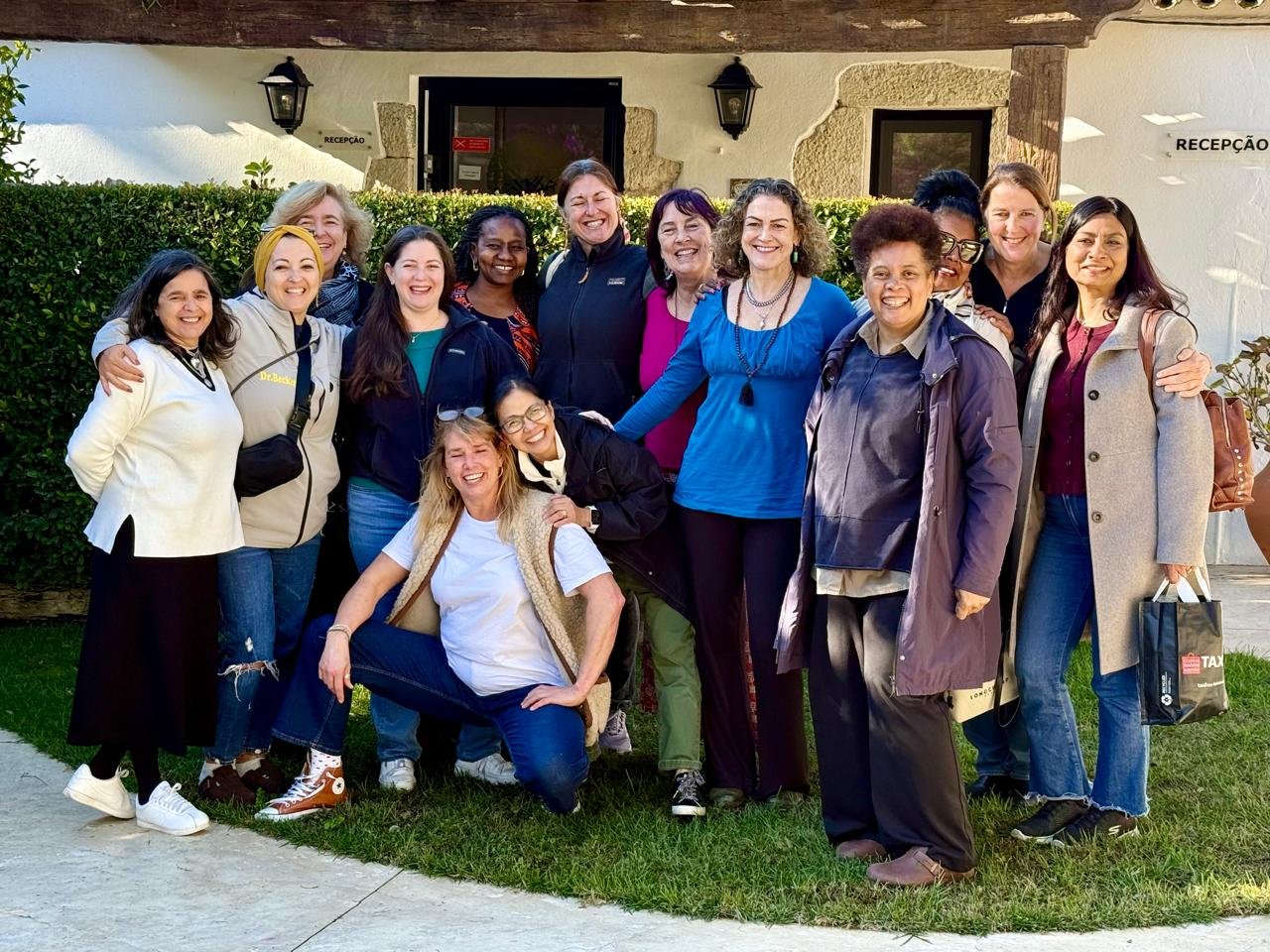
School leaders steeped in the transformative power of love-based leadership
Imagine enticing 15 seasoned international school leaders traveling over 100K miles roundtrip collectively from 3 continents to a working farm-turned-retreat center in rural Portugal in the midst of busy-crazy November to discuss an emerging approach to impactful and sustainable leadership. Only a powerful force could be responsible for this. A force that has leaders in corporations and global institutions like the World Economic Forum in its thrall.
That powerful force that drew these school leaders to Sidecar Summit Portugal 2025?
Love.
Interesting how the mere mention of that word makes so many of us squirm. Love? In the same sentence as leadership? Call HR! Or Child Protection Services! Or the Sexual Harassment task force!
Why do even the most educated and globally aware leaders have such ignorance of the concept of love, boiling it down to either a cliched rom-com sentiment or a feeling restricted to the 4 walls of a (fortunate) family home?
To reduce the power of love in this way is ignore a force that has the power to transform the way leaders lead, boards govern, schools function, teachers teach, students learn and grow, and communities operate. Indeed, the very way our world works.
This is no new – or new-agey - way of considering love. The ancient Greeks figured this out thousands of years ago. They identified six ways of understanding love: Philia (brotherly love – or shall I update that to siblingly love?), Pragma (long-term consistent love), Storge (familial love), Philautia (self love), Agape (love for humankind) and Eros (romantic, tingly love). Somehow humankind got rather stuck on Eros = Love, with some room offered to Storge. Of those two, Eros has nothing to offer a school leader, except perhaps in the form of a partner that inspires them. The others, though, can form a powerful foundation from which to lead a school.
Let’s delve into this more:
Philia is the love of deep friendship, the kind built on mutual respect, shared values, and genuine affection between equals. Many of us have experienced this with colleagues who become true friends, where professional relationship deepens into something more sustaining. This kind of love can absolutely exist in our schools, and I'd argue we're better leaders when it does.
Storge is familial love, the natural affection between parent and child, siblings, extended family. It's protective, enduring, often unconditional. In schools, we sometimes see this show up in how we care for students, especially our youngest ones. But we have to be careful here, because schools are not families, students are not our children, and the power dynamics are different. Still, there's something about this protective, nurturing quality that has a place in education.
Pragma is longstanding love, the kind that develops through commitment over time. It's practical, patient, mature. Think of couples who've been together for decades and have chosen each other again and again through all kinds of weather. In schools, this might look like our commitment to staff members even when they're going through rough patches, or our persistence with students who test every boundary. It's love that shows up and keeps showing up.
Philautia is self-love. And this is the foundation for healthy and sustained leadership. You cannot love/ serve/ care for others in a healthy or sustainable way if you don't love yourself. For many school leaders —especially women who've been socialized to be caregivers, people-pleasers, and self-sacrificers—this is the hardest kind of love to practice. But without it, love-based leadership becomes martyrdom. And martyrs don't make good leaders.
And finally, Agape. This is universal, unconditional love—the kind that extends to all humanity regardless of circumstance. It's often described as divine love, or the highest form of love. It's not based on what someone does for you or whether they deserve it. It's love as a choice, as a practice, as a way of being in the world.
When we talk about love-based leadership in schools, I believe we're talking primarily about a combination of philia, pragma, philautia, and agape.
We're talking about building relationships based on mutual respect and genuine care (philia). We’re talking about showing up with commitment even when it's hard (pragma). We’re talking about grounding ourselves in self-love so we can lead sustainably (philautia). And we're talking about extending a kind of unconditional positive regard to every member of our school community—not because they've earned it, but because that's the kind of leader we've chosen to be (agape).
Over the course of 3 ½ days, leaders at the Summit
· examined the case for love-based leadership -- drawn from Greek wisdom, and from research in the corporate and global institution worlds where its beneficial impacts are analyzed and documented
· distinguished it from other approaches to leadership on all-too-familiar display in schools and the world in general, e.g. fear-based leadership, shame-based leadership, command-and-control leadership, servant leadership (which can easily turn to martyr leadership)
· recognized that we practice aspects of love-based leadership daily -- staying up late worried about a teacher who's struggling, advocating fiercely for a student with particular needs, holding space for difficult conversations because they believe in people's capacity to grow. They just don’t call this ‘love’ (though are now learning to call it by its name).
· heard why self-love is mandatory for healthy, sustainable leadership, learning concepts and practices around self-compassion as a way in to self-love (grounded in the research of educational psychologist Dr. Kristen Neff).
· listened to case studies of impactful love-based leadership-in-action from several leaders in attendance
· discussed scenarios where leading with love is hard, particularly when it threatens to take us away from being the leaders we want to be. Even when we’re provoked, exhausted, or justifiably angry, we can respond in ways that align with our boundaries and values.
· took an honest look at how racism operates in school settings, in visible and often invisible ways, reflected on our own experiences, and explored ways to foster understanding, healing, and loving allyship as we work to create safer, more inclusive spaces for students and colleagues.
· engaged in peer-to-peer conversations about problems of practice and love-based ways to address these
· made commitments to putting what we learned about love-based leadership into action in our own leadership lives
· imagined creating a whole new system of education on the moon, founded on the basis of love, with implications for physical space, curriculum and pedagogy, community and relationships, and leadership and governance (stay tuned for more on this!).
Portugal summiteers left the summit with enthusiasm for putting what they learned into action, and have already started doing so in their schools. The photos and stories they’ve started to share are inspiring.
Here’s an audio clip with their reviews of the Summit.
Watch out! The ‘L’ word is contagious. You may find yourselves saying it without squirming, even in the walls of your schools. It’s a powerful force for strong, healthy, sustainable leadership.
And, frankly, it’s what the world needs now.
Yours in leading with love,
Bridget
P.S. A Summit experience is waiting for you!
· Still two places left for Sidecar Summit Cambodia 2026, held in Siem Reap from January 22-25, 2026. Contact me for more information and to save your spot. Registration closes on December 15.
· Regenerative Leadership: A Sidecar Summit in Spain, April 16-19, 2026, still has several spots available, on a first-come, first-served basis. April is not so very far away! And Spain’s Muga Valley, itself a regenerative project, beckons. Learn more and register here.
