
Presence: A Radical Act
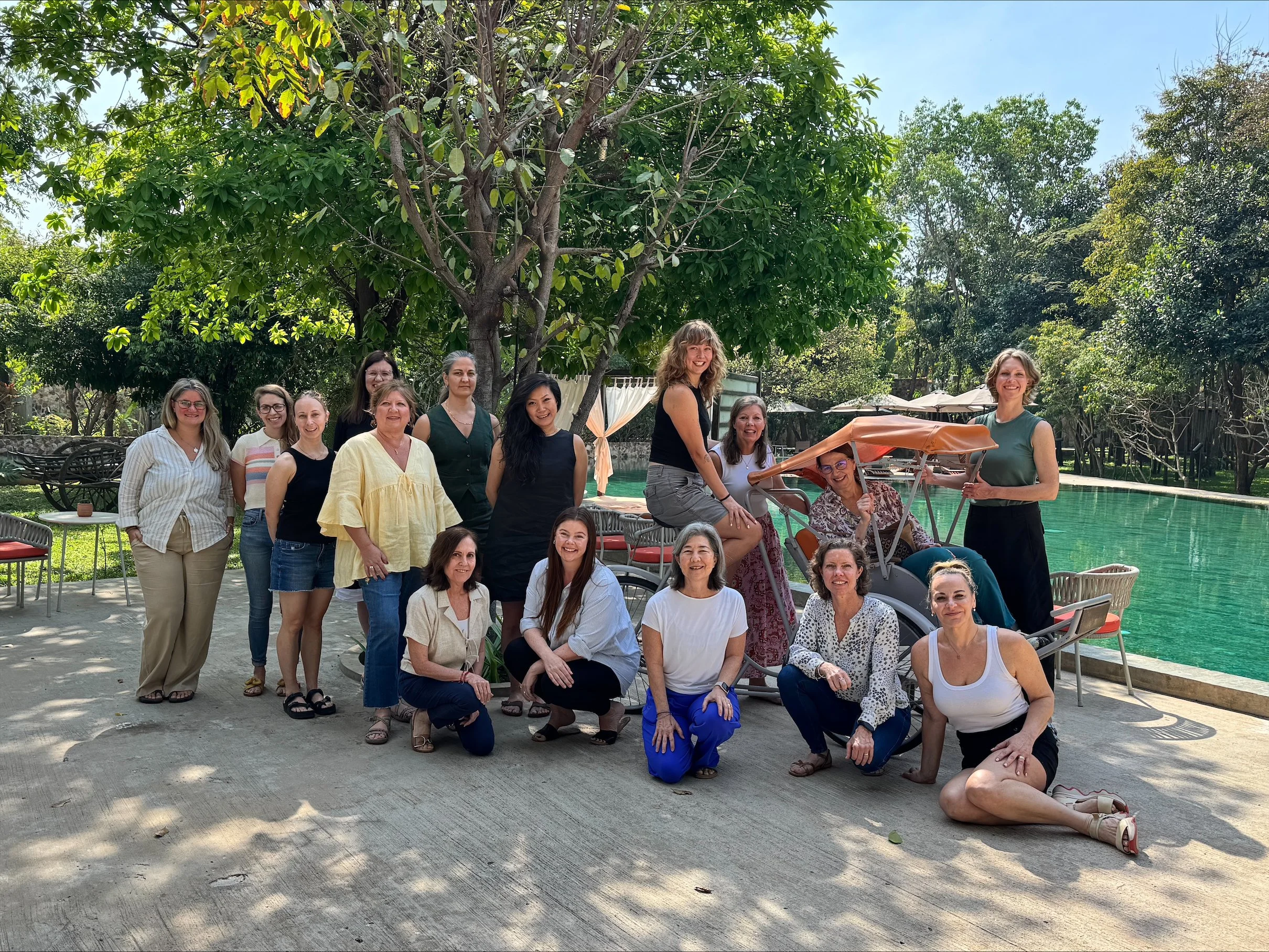
The presence rebels of Sidecar Summit Cambodia.
I’ve been mulling the concept of presence and its application for school leadership over the past several months, culminating with last week’s Sidecar Summit Cambodia, where we took this as our theme. Sixteen leaders from schools around Asia and as far away as Panama spent three days in one another’s presence, in the shadow of the magnificent presence of Angkor Wat, discussing ways to cultivate grounded, authentic and intentional presence in our leadership roles and our lives. Our conversations and my subsequent reflections eventually led me to this startling idea: centering presence in our leadership is a radical act. Let me lead you through my thinking.
At its core, presence is simply ‘the state of being in a particular place,’ which seems pretty straightforward. Indeed, sometimes presence is purely the act of showing up. Think about the times when that simple act of ‘just showing up’ makes all the difference: when you greet students at the school door, stand at the back of the classroom for an observation, or hang out with your own kids or spouse and simply convey that supportive presence without saying or doing anything.
Sometimes, it’s the quality of your presence that matters. Certain situations warrant presence of the truly being there/ paying attention/ avoiding distractions kind. Like meeting with parents concerned about their child’s progress in school, actively listening to a staff member’s aspirations for professional growth, really paying attention to your daughter and getting at the deeper message behind the superficial words. That might all fall into the category of ‘internal presence.’
Then there’s the external side, what we might called ‘expressed presence:’ how to speak with authority that feels genuine rather than performative; how to physically claim the space you need and deserve as a leader while being mindful of the impact this has on relationships; when and how to share parts of yourself with intention, so that vulnerability becomes a source of strength rather than exposure; how to make intentional choices about your visual presentation that amplify (rather than muffle) who you actually are.
Any of these aspects of presence is amplified when resting on the foundation of embodied presence, fully inhabiting your own body while being simultaneously aware of and responsive to what's happening around you, rather than living primarily in your head, disconnected from physical sensation and immediate experience. This takes practice for many of us who have convinced ourselves that our brains are the primary drivers of our leadership decisions and disassociate ourselves from the wisdom that inhabits other parts of our being.
Each of these aspects of presence sound innocent enough. And yet, there are ways in which being present, expressing genuine presence, or cultivating internal presence can be radical:
· When a school system perpetuates the imagery of leader as white, male, cisgender, ‘just showing up’ as a leader outside of those norms is an act of resistance.
· In environments that prize certainty as a leadership trait, a leader who shows up acknowledging what they don't know, admitting mistakes, or revealing genuine emotion is making a counter-cultural statement.
· When school leadership cultures perpetuate the notion of leader-as-absent – too ‘busy’ or important to be around for the day-to-day of school life – leaders who are actively present in their school communities, for whom they genuinely care, are revolutionaries.
· In spaces where productivity is the highest metric of success, leaders who prioritize depth of engagement over volume of output are challenging the entire operating system.
· In the increasingly hectic pace being perpetuated in schools, simply taking the time to pause and put a momentary halt to the hamster wheel is radical. Even more so when that pause provides time to reflect and perhaps ask oneself: ‘Wait. What? Why?’ And then pursue your curiosity further.
Particularly in this time of history, when traditional notions of leadership are proving insufficient for the circumstances (how’s that for an understatement?), cultivating and expressing presence may be the revolutionary leadership practice that our schools, and the world, most needs.
Yours in prioritizing ‘deep being’ over ‘productive doing,’
Bridget
